
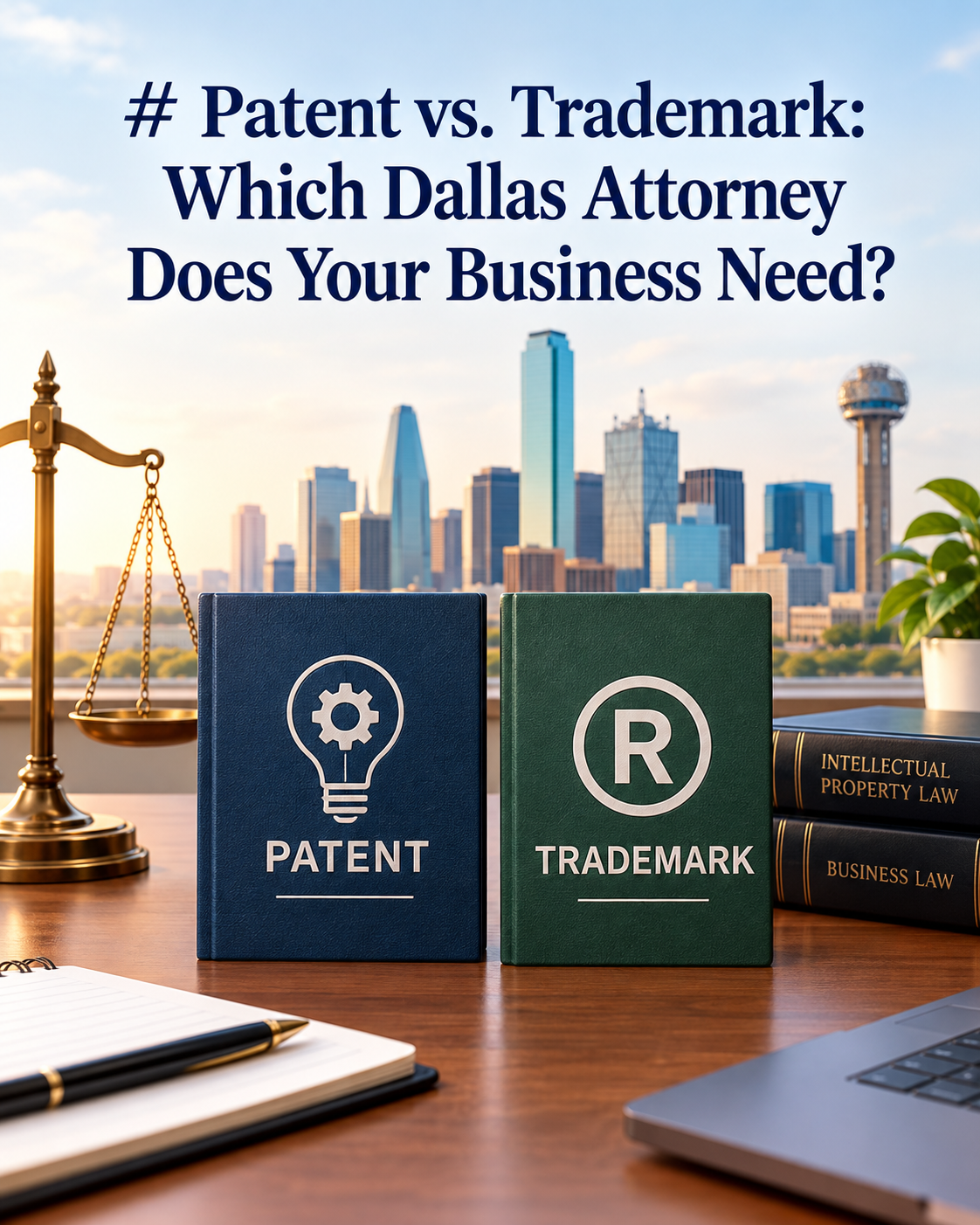
If you are building a business, creating a new product, or launching a brand, we understand how important it is to protect what you have worked hard to create. But should you apply for a patent, register a trademark, or consider both? The answer depends on what you want to protect. A patent may protect a qualifying invention, while a trademark helps protect the name or logo customers use to recognize your business.
We help you understand these differences so you can make informed decisions and avoid unnecessary confusion. If you are looking for a Trademark Attorney Dallas, TX, or need help protecting a new invention, Grell & Watson Patent Attorneys can guide you through your options and help you plan your next steps.
What Is the Difference Between a Patent and a Trademark?
A patent protects a qualifying invention, while a trademark protects a brand identifier, such as a business name, logo, or slogan used for particular goods or services. The right choice depends on what you have created.
For example, if you have developed a new kitchen tool, a patent may protect its new functional features if it meets the legal requirements. A trademark may protect the name customers see on its packaging.
Patents and trademarks serve different purposes, and one does not replace the other. Some businesses may benefit from both.
To learn more, explore our guide to understanding your intellectual property options: trademarks and patents.

When Do You Need Patent Attorney Services?
If you have created a new product, machine, process, or technical improvement, we can help you explore whether it may qualify for patent protection.
Our patent-related services can help you:
- Explore whether your invention may qualify for a patent.
- Search for similar inventions before investing further.
- Understand the available patent application options.
- Prepare an application that clearly describes your invention.
- Understand filing deadlines and possible future costs.
A patent search is a useful early step because it can help identify similar inventions before you spend more time and money on an application. You can learn more about protecting your idea in our guide to patent searches and prior art.
A provisional patent application can be a lower-cost first filing for an eligible invention. It can establish a filing date and allow you to use “patent pending,” but it is not an issued patent. You generally need to file a corresponding non-provisional application within 12 months to benefit from the provisional filing date.
Our provisional patent application guide explains how this process works.
When Should You Seek Trademark Protection?
If you are choosing a business name, launching a product, creating a logo, or expanding your brand, we can help you understand the trademark process.
Before filing, it is important to search for similar marks and identify the goods or services connected to your brand. A name being available as a domain or business registration does not automatically mean it is available for trademark registration.
We can help you understand search results, prepare an application, and address concerns raised by the USPTO. Federal registration can provide important legal benefits, but approval is not guaranteed.
If you want to protect your business name or logo, read our step-by-step guide on how to trademark a name, logo, or both.

Can You Need Both Patent and Trademark Protection?
Yes. Your business may need both because patents and trademarks protect different things.
For example, if you have created a new fitness device and plan to sell it under a unique brand name, a patent may protect qualifying features of the device, while a trademark may protect the brand name used to identify it in the market.
At Grell & Watson Patent Attorneys, we help you understand which parts of your invention or brand may need protection and which options may fit your business goals.
How Do You Choose the Right Attorney in Dallas?
Choose an attorney who understands your goals, explains the process in plain English, and provides clear information about fees and next steps.
When comparing Patent Attorneys in Dallas, ask about experience with inventions like yours, patent searches, application preparation, and potential costs after filing.
For trademark matters, ask about clearance searches, application preparation, and possible USPTO objections. Make sure you understand what your agreed fee covers and which services may cost extra.
We believe informed decisions start with clear answers. Our website describes 15 years of patent experience, and we encourage you to ask questions before committing to a legal strategy.
If you need broader guidance, explore our intellectual property practice areas to learn how patent and trademark protection may fit into your plans.

Protect What Makes Your Business Different
You have invested time and effort in your invention or brand, and we want you to understand the options available to protect it. Choosing between a patent and a trademark starts with identifying what you need to protect, your goals, and your budget.
Contact Grell & Watson Patent Attorneys to discuss your needs and ask about a free consultation. We can help you understand the process, explore your options, and plan your next steps.
Frequently Asked Questions
1. Should You File a Patent or a Trademark First?
It depends on what you want to protect and your timeline. If you have an invention, discuss patent options before public disclosure. If you are launching a brand, consider a trademark search before investing heavily in the name.
2. Can You Patent a Business Name?
No. Patents protect qualifying inventions, not business names. A trademark may protect a name used to identify your goods or services.
3. Can a Small Business Apply for Both?
Yes. Your business may seek a patent for an invention and trademark protection for its brand if each meets the applicable requirements.
4. Does a Provisional Patent Application Give You an Issued Patent?
No. A provisional application is not examined and does not become an issued patent by itself. You generally need a corresponding non-provisional application within 12 months to benefit from its filing date.
5. Does Hiring an Attorney Guarantee Approval?
No. The USPTO decides whether an application meets the legal requirements. We can help prepare your application and address issues, but no attorney can guarantee approval.
Leave A Comment