
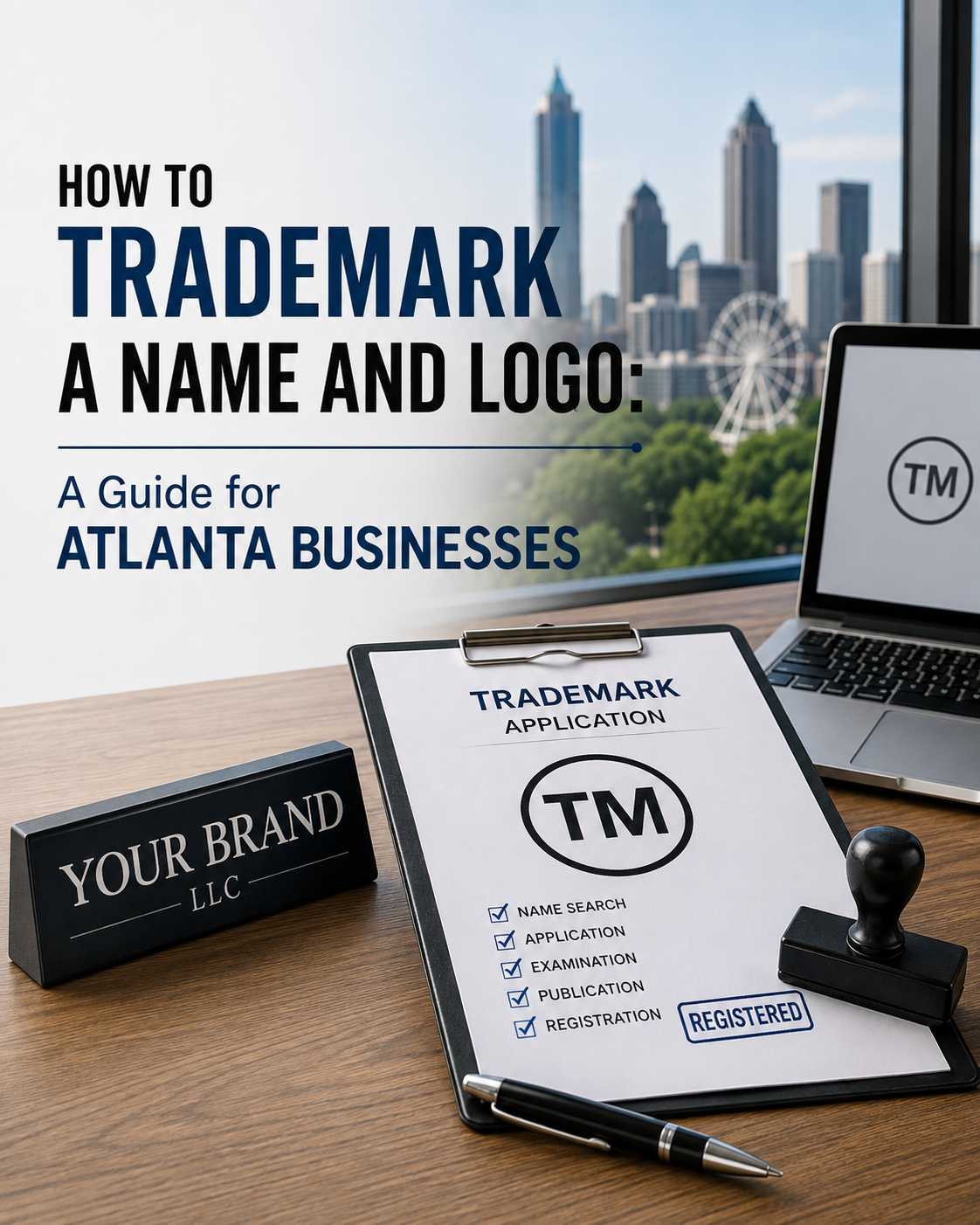
How Do You Trademark a Name and Logo?
To trademark a name and logo, you should first choose a strong brand, search for similar trademarks, determine what goods or services the brand covers, prepare the required information, and file an application with the USPTO. Federal registration can provide broader protection across the United States, but the application process has important legal requirements.
For Atlanta startups, inventors, and small businesses, protecting a brand early can help avoid expensive disputes later. At Grell & Watson Patent Attorneys, we have more than 15 years of experience helping clients protect their intellectual property and understand their legal options.
Why Should You Trademark Your Business Name and Logo?
Your business name and logo can become some of your most valuable assets. Customers use them to recognize your products or services and separate your business from competitors.
Trademark registration is not required to have trademark rights. However, federal registration can provide stronger and broader protection. The USPTO explains that federal registration creates a legal presumption of ownership and provides rights throughout the United States and its territories.
This can become especially important when a small Atlanta business begins selling online or expanding into other states.
Step 1: Choose a Strong Trademark
Start by deciding exactly what you want to protect.
This might include:
- Your business name
- A product name
- A logo
- A slogan
- A combination of words and design
Not every name or logo receives the same level of protection. Stronger, more distinctive marks are generally easier to protect than names that simply describe the product or service.
A Patent Attorney in Atlanta, Georgia, can also help if your business is developing a new invention that may need patent protection in addition to trademark protection.
Step 2: Search for Similar Trademarks
Before filing, search for existing trademarks that could conflict with yours.
This is one of the most important steps because a mark does not have to be identical to yours to create a problem. Similarity in sound, appearance, meaning, or overall commercial impression may create a likelihood of confusion when the related goods or services are similar.
The USPTO recommends searching its database before applying, but its database search alone does not provide a complete answer. Other sources, including business and state records, may also need to be considered.
Step 3: Decide What You Are Protecting
A name and a logo are not always treated the same way.
For example, you may want protection for the wording of your brand separately from protection for a particular logo design. Your filing strategy should match how you actually use the brand and how you expect to use it as your business grows.
This is an area where an experienced Atlanta Trademark Attorney can help you understand your options before you spend money on filing fees.
Step 4: Identify Your Goods and Services
Your application must identify the goods or services connected with your trademark.
This matters because trademark rights are connected to the goods and services covered by the registration. The USPTO requires applicants to provide correctly classified goods and services and pay a filing fee for each class.
Choosing the right descriptions can help create a more useful application and avoid unnecessary problems later.
Step 5: File Your Trademark Application
Trademark applications are filed through the USPTO’s Trademark Center. Applicants must provide required information about the owner, filing basis, goods or services, and other application details.
Filing the application is only the beginning. After submission, a USPTO examining attorney reviews the application and searches for conflicting marks.
If the USPTO raises an issue, you may receive an Office Action that requires a response.
Step 6: Respond to USPTO Issues
A trademark application can face problems for several reasons. One of the most common is a likelihood-of-confusion refusal.
This is why professional guidance can be valuable. A Trademark Lawyer in Atlanta, Ga can review potential conflicts, explain USPTO communications, and help you understand what options may be available if the application receives an objection.
The USPTO currently states that an Office Action generally requires a response within three months, with an optional three-month extension available for a fee in applicable cases.
What About Protecting an Invention?
Many Atlanta businesses develop both a brand and a new product. These may require different forms of intellectual property protection.
A trademark protects a brand identifier, while a patent can protect an invention. If you are developing a new product, it can be helpful to consider both strategies early rather than waiting until the product is ready for market.
Grell & Watson also helps inventors understand the patent process, including Provisional Applications and the steps toward patent-pending status. Its published materials recommend documenting an invention with drawings, labeled parts, and written descriptions before filing.
You can also explore our related guide on how to document your invention if you are working on a new product alongside your brand.
When Should You Speak With a Trademark Attorney?
The best time is usually before you invest heavily in a brand.
Changing a business name after years of marketing can be expensive and disruptive. Early legal guidance can help you identify potential conflicts and make better decisions before launching.
Whether you are starting a local business, building an online company, or preparing to launch a new product, an experienced attorney can help you understand the process without unnecessary legal confusion.
Final Thoughts
Trademarking a name and logo is more than completing a government form. It is about building a stronger foundation for your business and protecting the identity customers come to recognize.
At Grell & Watson Patent Attorneys, we have more than 15 years of experience helping inventors, entrepreneurs, and small businesses protect their intellectual property.
If you are unsure whether your name or logo is available for registration, consider speaking with an experienced Trademark Lawyer before moving forward. A consultation can help you understand your options, potential risks, and the next practical step.
Frequently Asked Questions
- Do I have to register my business name as a trademark?
No. You can have some trademark rights through use, but federal registration can provide broader protection and important legal benefits. - Can I trademark both my business name and logo?
Yes. A business may seek protection for its name, logo, or both, depending on how the marks are used and the protection it wants. - How long does it take to register a trademark?
It can take several months or longer. The timeline depends on USPTO review, possible objections, and whether additional responses are required. - What happens if someone already has a similar trademark?
A similar mark does not automatically mean your application will be refused. The USPTO considers factors such as the similarity of the marks and whether the related goods or services could cause consumer confusion. - Can I file a trademark application myself?
Yes. U.S.-based applicants are not required to hire an attorney, although the USPTO strongly encourages applicants to work with a U.S.-licensed attorney who specializes in trademark law.